
Perspectives & Updates
Scientific commentary, regulatory developments, AXIS updates, and ongoing engagement related to PFAS and other emerging contaminants, environmental toxicology, exposure science, public health, and complex environmental decision-making. AXIS Perspectives examines evolving environmental issues through balanced interdisciplinary interpretation, with attention to both the strength of available evidence and the limits of what that evidence can support.
Recognition Spotlight
Appointment to the U.S. EPA Science Advisory Board
Dr. Nicole Dennis was appointed to the United States Environmental Protection Agency Science Advisory Board, contributing scientific expertise related to environmental contaminants, toxicology, public health, and environmental evaluation… READ MORE
AXIS EIG opinions and work products are independent of, and do not represent the views or endorsement of, the U.S. EPA. Dr. Nicole Dennis’s service on the EPA Science Advisory Board is undertaken in her individual capacity and remains separate from AXIS client work. Potential conflicts of interest are evaluated and disclosed as required.
Recent Scientific Engagement
National PFAS Conference 2026
Tucson, Arizona • June 8–10, 2026
AXIS Environmental Intelligence Group attended the 2026 National PFAS Conference to engage with researchers, environmental professionals, policymakers, public-health experts, and impacted communities. Conference discussions addressed PFAS fate and transport, environmental toxicology, exposure science, analytical methods, regulatory developments, and community protection. The event reinforced the importance of integrating scientific, regulatory, and community perspectives when evaluating complex PFAS contamination and exposure concerns.
Featured Perspective
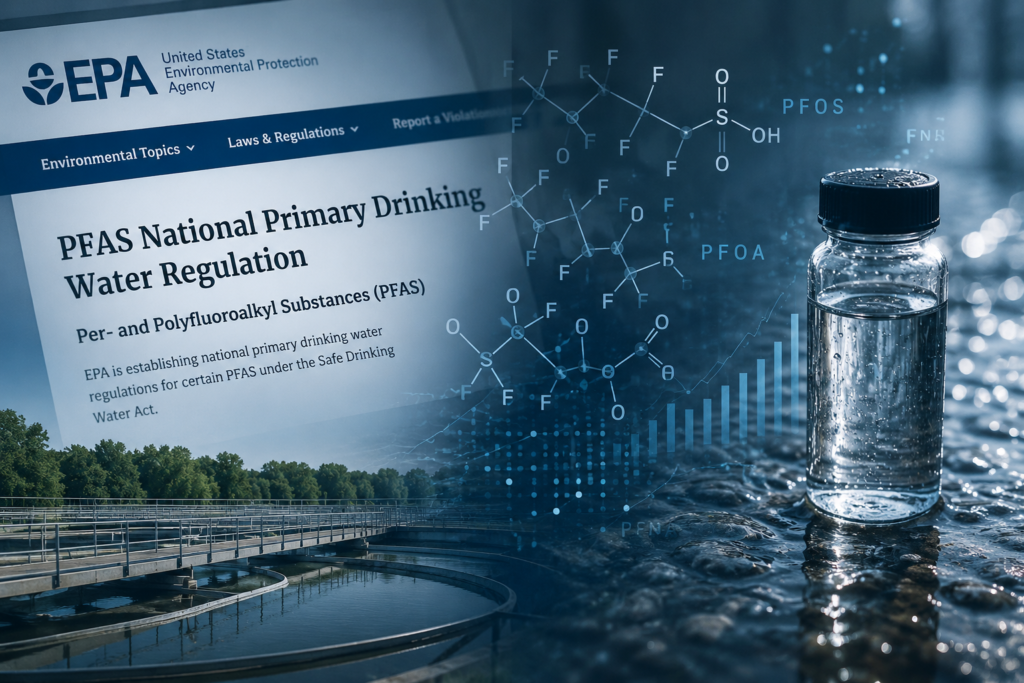
The U.S. EPA Proposes Changes to PFAS Drinking Water Regulations
EPA announced proposed revisions involving PFAS drinking water standards, toxicity assessments, and contaminant evaluation frameworks that may significantly influence environmental risk interpretation, regulatory evaluation, and public health decision-making involving PFAS exposures… Proposed PFAS Rescission Rule, Proposed PFOA and PFOS Compliance Extension, EPA PFAS Drinking-Water Overview
Evolving EPA PFAS Regulations and Environmental Risk Interpretation
Published May 18, 2026 • Updated September 4, 2026
On May 18, 2026, the U.S. Environmental Protection Agency announced two proposed changes affecting the 2024 National Primary Drinking Water Regulation for PFAS. One proposal would allow qualifying public water systems to request up to two additional years—until 2031—to comply with the existing PFOA and PFOS maximum contaminant levels. In practical terms, EPA is considering giving some water systems more time to meet the current PFOA and PFOS limits; it is not proposing to remove those limits. The second proposal would rescind the regulatory determinations and related drinking-water provisions for PFHxS, PFNA, HFPO-DA, commonly known as GenX, and mixtures evaluated through the PFAS Hazard Index. Because both actions remain proposed rather than final, they should not be interpreted as though the regulatory framework has already changed. The public-comment periods for both proposals closed on July 20, 2026. As of September 4, 2026, EPA had not finalized either proposal.
The two proposals should not be treated as a single scientific determination. The proposed PFOA and PFOS action concerns implementation timing while retaining the enforceable concentration limits. The proposed rescission concerns EPA’s current conclusion that it combined rulemaking steps that the Safe Drinking Water Act requires to occur in sequence. EPA now says it adopted the standards through the wrong sequence of legal steps; it should first have completed the formal decision to regulate these PFAS and then proposed the specific drinking-water standards through a separate stage of public review. According to EPA, the proposed rescission is procedural and does not represent a new conclusion that the affected contaminants no longer present potential health concerns.
A change in regulatory procedure or compliance timing should not be mistaken for a change in the evidence concerning PFAS contamination, exposure, or potential health effects. Extending a compliance deadline does not reduce measured PFAS concentrations, eliminate an existing exposure pathway, or alter the toxicological evidence; more time to comply does not mean less contamination. Likewise, reconsidering or rescinding a regulation for procedural reasons does not erase measured concentrations, existing exposures, or the scientific literature concerning potential health effects. Regulatory status and scientific evidence are related, but they are not interchangeable.
Public water systems and municipalities may therefore need to evaluate several issues separately. They must determine which federal requirements remain in effect during the rulemaking process, what monitoring, reporting, treatment, and communication obligations currently apply, whether state requirements differ from or exceed the federal framework, and how the proposed changes may affect long-term planning and treatment investments. The practical question is not simply whether EPA has announced a possible change. Decision-makers must determine what rules apply now, what actions remain necessary, and whether altering treatment or monitoring plans before the federal process is complete would be scientifically and operationally justified.
The central interpretive task is to separate what these proposals may change as a matter of federal regulation from what they do not resolve as a matter of science. A delayed compliance deadline does not reduce contamination, and a procedural rescission does not, by itself, invalidate measured concentrations, documented exposure, or the health evidence relevant to the affected PFAS. Until the rulemaking process is complete, sound decisions should be based on the requirements currently in effect, applicable state standards, actual analytical results, site-specific exposure conditions, and the best available toxicological evidence. Regulatory change may alter legal obligations; it does not independently change the underlying environmental reality.
Connect with AXIS Environmental Intelligence Group, LLC to discuss an environmental, regulatory, public-health, or litigation matter requiring independent scientific analysis and strategic advisory support.